Iconographers Drobot, (Paris)
ICONOGRAPHERS: ARCHPRIEST GEORGE DROBOT AND GEORGE G. DROBOT

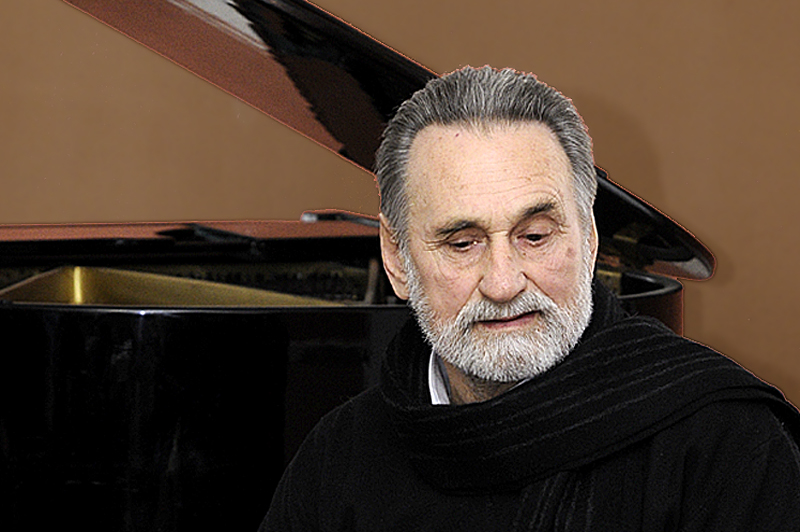
Drobot Georgy Nikolaevich was born on November 2, 1925 year in Kharkov. He was the son of Nikolay Trofimovich Drobot, and brother of Vsevolod Drobot. Georgy Nikolaevich is the father of Georgy G. Drobot and priest Andrey Drobot. After the German invasion of the Soviet Union in June 1941, he was forcibly taken to Germany, to Berlin as «Ost-arbeiter». At the end of the war he moved to France. He graduated from the St. Sergius Orthodox Theological Institute in Paris. He married the niece of the Metropolitan Vladimir (Tikhonitsky). Georgy Drobot was ordained deacon in 1952 and in the priest in 1953. He was rector of a church in Moranzhe (Department of Moselle, 1953-1955), and then the Church of the Holy Trinity in Montbeliard (department Du). He similarly performed in 1956-63, responsibilities of the rector of St. Spyridon Tremithous in Rueil-Malmaison (near Paris). He became Archpriest in 1974, member of the Diocesan Missionary Committee. In 1960, he took up iconography, and designated temples in Clamart (near Paris) and Murmelone (Marne department). He is the founder of the iconography school, and prepared numerous students (mainly in France). Member of the Society “Icon” in Paris. In 1967, he participated at the exhibition of modern icons, organized by St. Sergius Church on the 40th anniversary of the Society “Icon”. He delivered lectures about the Russian icon at meetings of the Russian Student Christian Movement (RSCM). In 1973 he defended his dissertation at the Catholic Institute for a doctorate in theology on “The Iconography of the Nativity of Christ.” From 1963 to 1988, he was rector of the church of Constantine and Helen in Clamart (near Paris). Since the mid-1980s. he also served in the monastery of All Saints Resplendent in the Russian Land, near the city of Murmelon (France). Since the late 1990’s he resided in Strasbourg (France). In 2003 he became the Mitre Archpriest. He retired in 2004. Georgy Nikolaevich Drobot passed away on November 4, 2011 year in the “Russian House” in Sainte-Genevieve-des-Bois, near Paris.
.

“Christ Pantocrator” (30 x 25 cm) by Archpriest Georgy Drobot
.
.
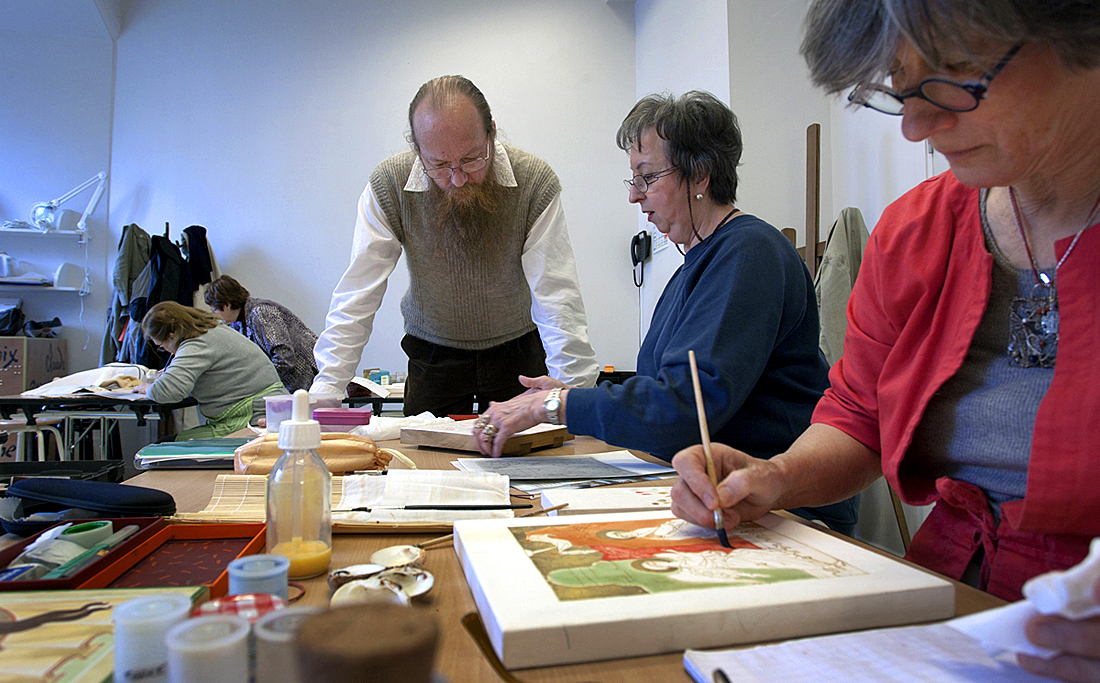
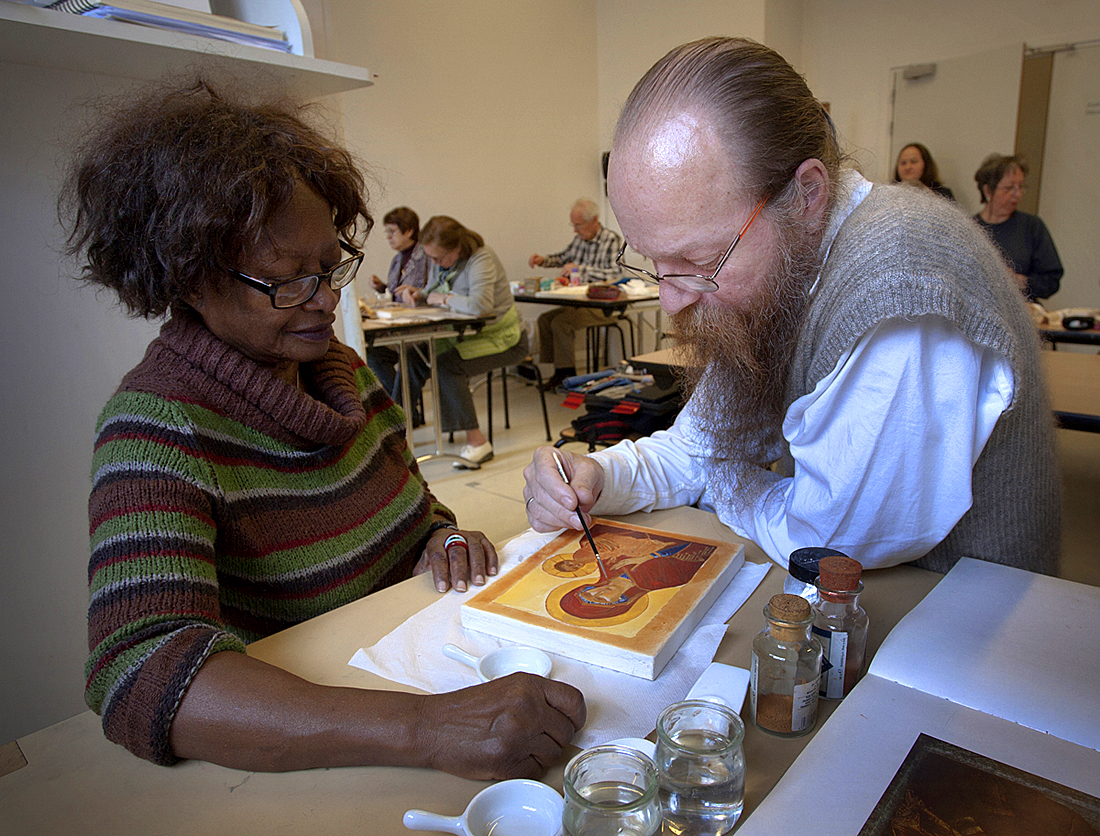
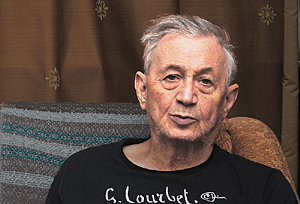
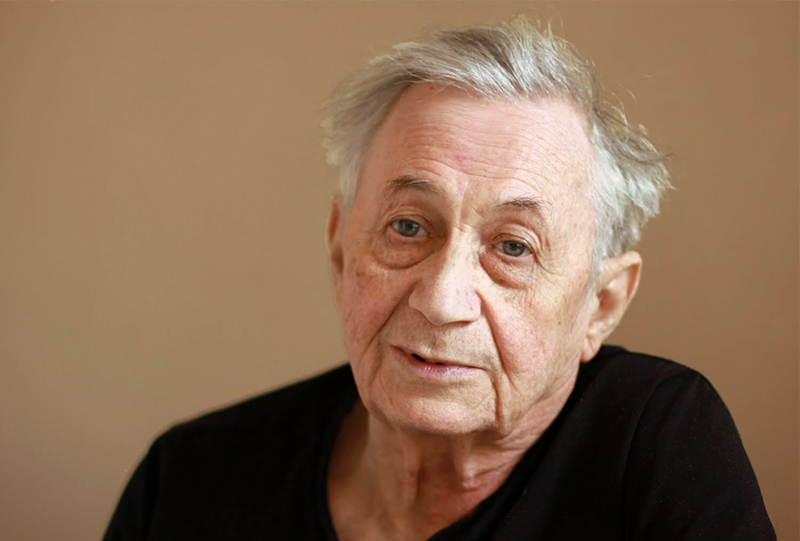
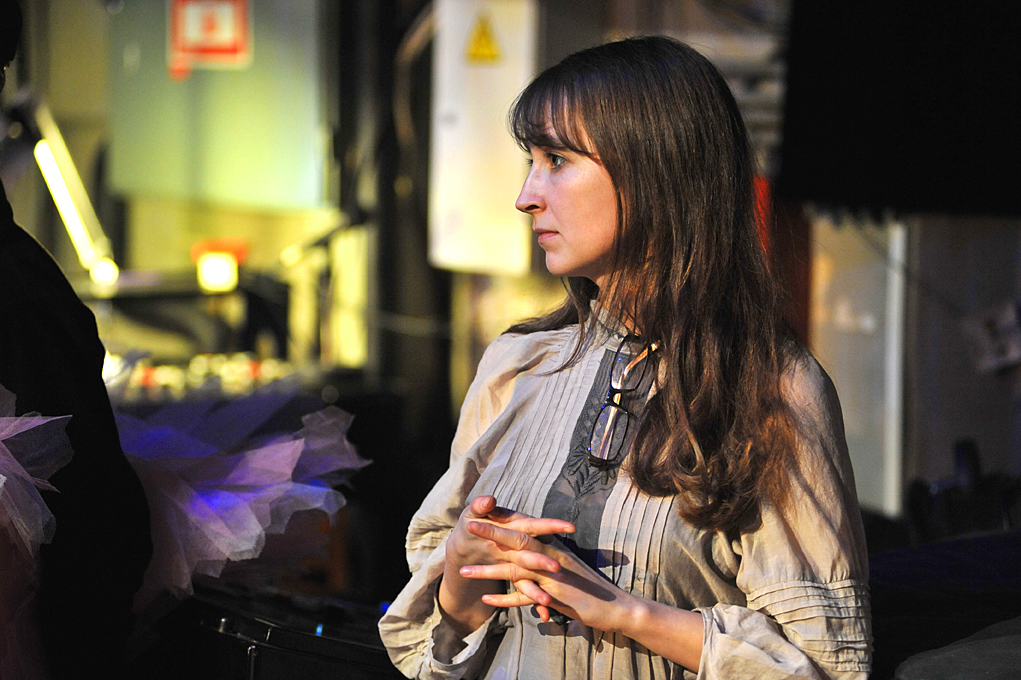
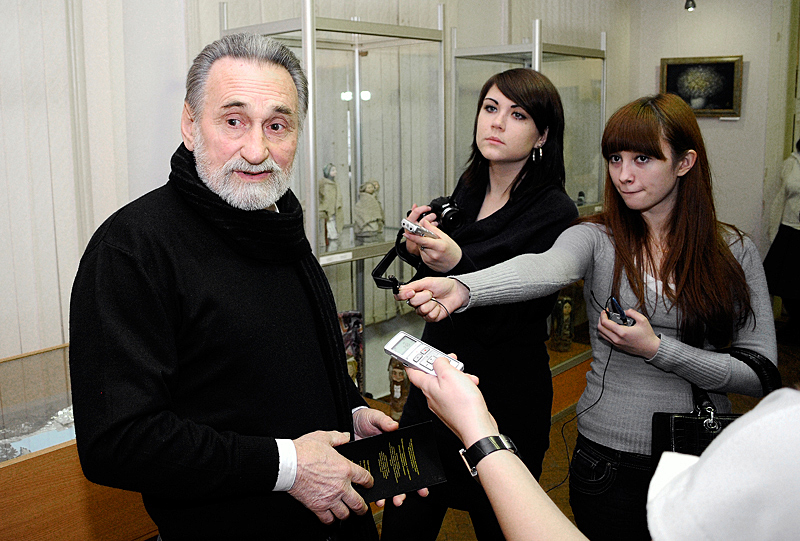
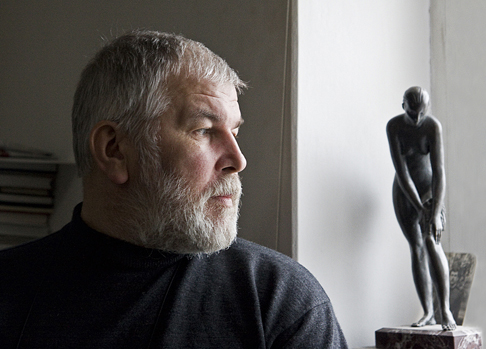
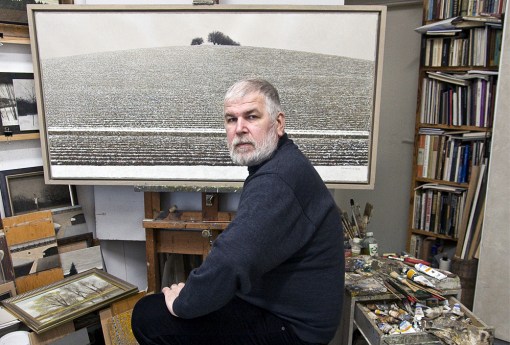
Son of Archpriest George Drobot, icon painter George G. Drobot met us at his studio in the Petit Palais, located on Winston Churchill Avenue in Paris. In this room, the icon-painting school still works, founded half a century ago by his father. Today we would like to offer the conversation with George G. Drobot and photo essay by photographer Vladimir Bazan about this island of Russian culture in the French capital, to the readers of “Russian Art & Paris”.
.
“An amazing variety of fixations of the mysteries in our faith…”
Interview of the iconographer Georgy Drobot for the “Russian Art & Paris” journal.
.
RA&P: – Georgy Georgievich, the tradition of Iconography involves continuous adherence to the same canon for generations. How is it possible to found a new painting school by Archpriest Georgy Drobot?
Georgy Drobot: – It is not correct to speak of a new school of icon painting. This concept is peculiar to historians in art, who continue the evolution of style through time and space. Specifically in time and space – modern icons are not the same in the USA, Europe and Russia, or Greece. For the iconographer, this approach is completely different: it seeks to convey the age-old tradition of the church (canon), despite the fact that the support will be Byzantine, Russian or Balkan. The approach is not based on style, but meaning. I am referring to the deceptive form that often conceals charm, delight, and tender emotion. The canonical icon presents a holy image, an example of which is the history of man, whom we honor, because in his life he embodied the right attitude, the ascent to that, to which man is called – to the eternal peaceful life at the source of love of our Lord Jesus Christ. This is what an icon should portray. To present this salutary admonition in a worthy way, there have been centuries of polishing of the canonical measure, which we devoutly obey. Catholicity directs our creativity to the glory of the Lord, and not arbitrariness. Style undergoes constant change – most important is to be in the correct prayer proportion: Image-Prototype. And then, we see an amazing variety of fixations of the mysteries in our faith and church history with the glorification of the hordes of saints. The iconographic mail letter is like handwriting: there are individual traits, there are historically-national 
 moments: the Balkans, Greece, Syria, Egypt, Russia – all Orthodox country, but how many different temperaments. So the main motive of Archpriest George Drobot was to indicate the Beauty of the Orthodox tradition, while being in exile.
RA&P: – Who was involved in the creation of this icon painting school, in addition to your father?
Georgy Drobot: – The very first modern schools of icon painting appeared in the West, during the 30s years. In 1925 year the first association in Paris was created – «Assotiation Icône», thanks to V. Ryabushinsky, N. Istselenov, G. Morozov and others. In the 50s years they were joined by new refugees: G. Krug, L. Uspensky, etc. My father was also involved in that union, having previously studied under Pimen Safronov in Rome. The first customers were many Russian immigrants and Orthodox churches, which back then where created modestly. It should be noted that even Catholics too, with great interest, accepted the traditional Orthodox icon. In those years, after World War II, communication with the Russian Orthodox Church in the Soviet Union had been difficult for obvious reasons. Now, thank God, things have changed and the exchange is developing very creatively with Russian icon painters. Plots, as in ancient times, are the Virgin, the Saviour, the patron saint and the newly glorified. Similarly there appear icons of Western saints of St. Francis, St. Teresa, etc. First we need to respect the praise of our common blessed saints (before the split of year 1054) that are still revered in the West as in the East Christian world. The Catholic Church has since glorified many devotees that can be adequately represented by the icon. But this is justified only to Catholics. Orthodox people ought not to pray before the icons of Western saints.
RA&P: – Creating Icons is a complex process. How big is the proportion of modern, including synthetic, materials?
Georgy Drobot: – Iconography technology strictly observes ancient techniques: they have been tested for centuries! Modern materials are only tempting to the lazy.
RA&P: – Ancient icons were repeatedly over-painted. How to determine the original?
Georgy Drobot: – In restorative practice, the technology of separating layers has been developed. That is, each layer of paint is transferred to a new foundation, and is not destroyed (I.Grabar Institute of Scientific Restoration and Conservation of Arts, development by V. Ovchinnikov). In this case, the original paint layer can be very damaged. Laboratory analysis can determine the reasonableness of delamination of later layers.
RA&P: – In Russia, at present, there is a process of restitution of the Russian Orthodox Church’s possessions lost in the Soviet era. There is a pressing issue about the return of icons that are in museums and require special storage conditions. How do you feel about the possibility of the transfer of icons from the museum’s collections?
Georgy Drobot: – The icon is the subject of prayer and church worship. Then an icon lives and benefits the believers. A museum is not it place. See the remarkable step of the State Tretyakov Gallery: Vladimir’s Icon of the Mother of God was moved to the Chapel, where there is a glimmer of a lamp, candles, and pilgrims come free with their prayers to this beautiful monument of our history.
RA&P: – How do you feel about the idea of an exhibition of modern icons?
Georgy Drobot: – In fact, the icon is not the subject of exhibitions, like any other work of art. However, the first contact often occurs due to exhibitions. Perhaps it is reasonable. ©
On September 27, 2012 from Paris.
Copyright by Russian Art & Paris.
.

The icon of the Mother of God “Tenderness” (30 x 25 cm) by Georgy G. Drobot
.
____
Note: The full photo essay by photographer Vladimir BAZAN is in our section “Photo Essay”
.


.
.

























 Russian Art & Paris

